
































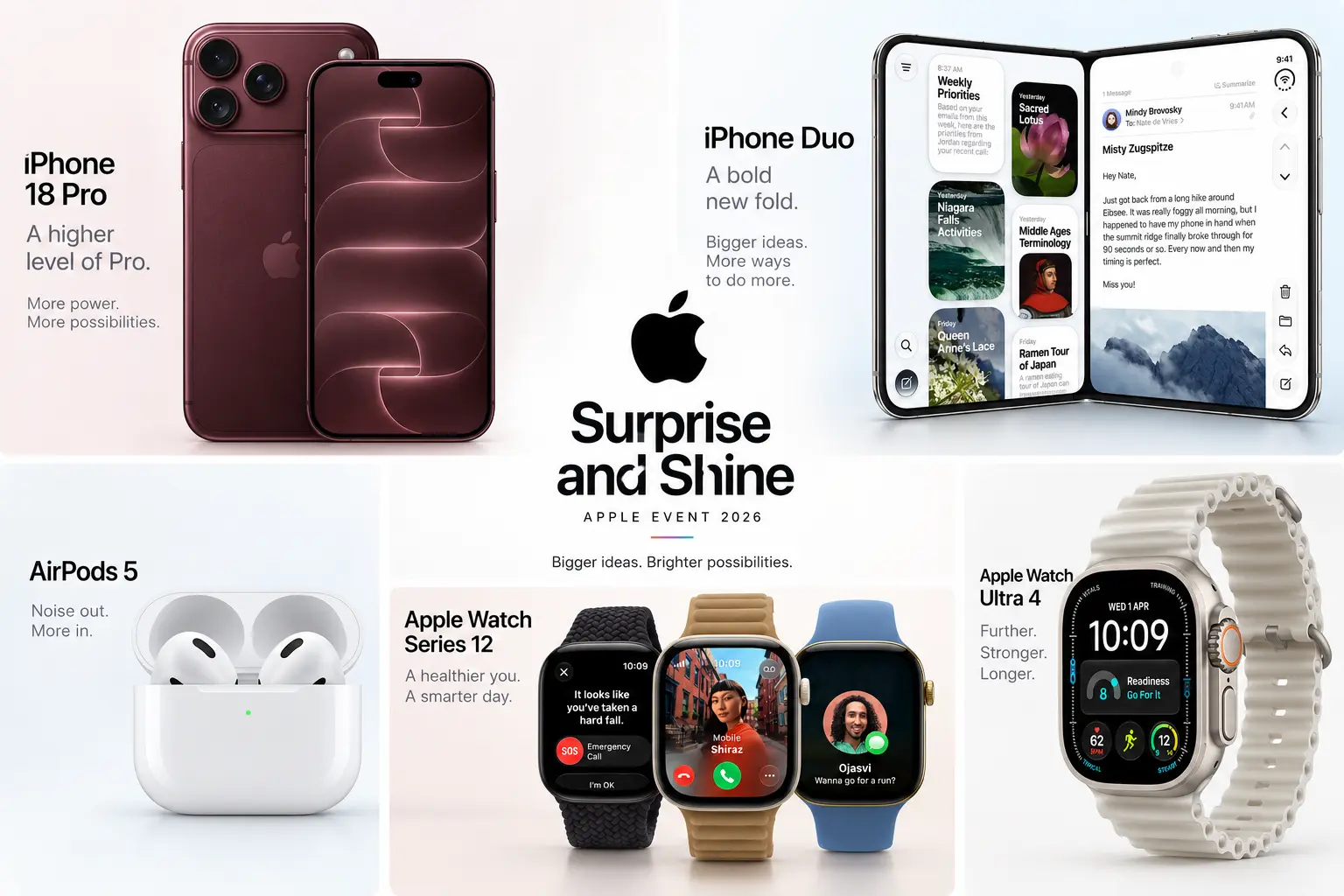
Apple has unveiled a new generation of products at its “Surprise and Shine” event, led by the company’s first foldable iPhone and its most significant iPhone redesign in almost two decades.
The event on Wednesday was the first major Apple product launch under John Ternus, who became CEO after Tim Cook stepped down earlier this month.
The headline announcement was the iPhone Duo, Apple’s first foldable smartphone. The company also introduced the iPhone 18 Pro and iPhone 18 Pro Max, new Apple Watch models and AirPods 5.
Apple also used the event to expand its artificial intelligence strategy, with new capabilities for Siri AI and Apple Intelligence.
Here’s everything Apple announced.
1. iPhone Duo
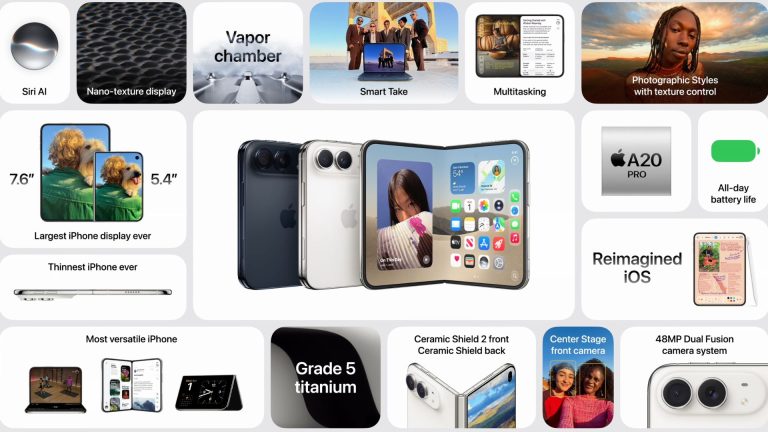
The iPhone Duo was the biggest announcement of the event and Apple’s first entry into the foldable smartphone market.
The device uses a book-style design. When opened, it becomes a tablet-like device with a 7.6-inch Super Retina XDR display. A 5.4-inch display sits on the outside for use when the phone is folded.
Both displays support ProMotion and Always-On functionality. Apple says the screens can reach up to 3,000 nits of peak outdoor brightness.
The Duo is 5.2mm thick when open, 11.3mm when folded and weighs 254 grams.
Apple built the enclosure from grade 5 titanium and gave the folding display a multilayer protection system. The company has also added a new hinge designed to make the two halves feel like a single device.
The phone has an IP68 rating for water and dust resistance.
The Duo starts at $1,999 for 256GB. Storage options extend to 512GB, 1TB and 2TB, with the top model costing $3,199.
Pre-orders begin October 16, with the phone going on sale October 23.
The device is also eSIM-only, with no physical SIM tray in any market.
Apple has replaced Face ID with Touch ID built into the side button.
The Duo is powered by the new A20 Pro chip and supports multitasking features that allow two apps to run side by side. Users can also open two windows from the same app.
Apple will add USB-C Apple Pencil support later this year.
2. The Duo turns the camera into part of the foldable experience
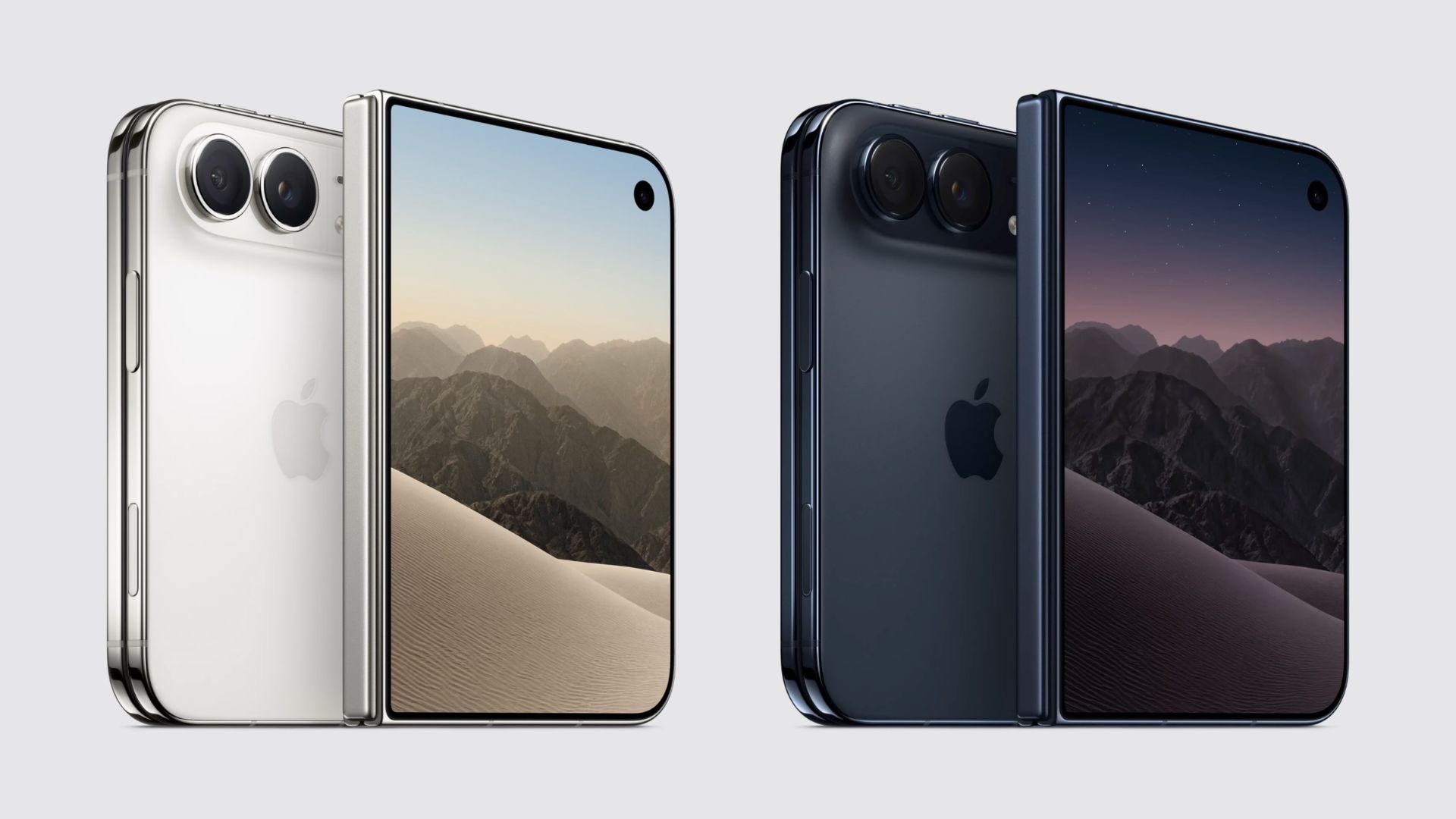
Apple has designed several camera features specifically around the Duo’s two-screen design.
The rear system includes a 48MP Main camera and 48MP Ultra Wide camera.
The phone also has a 12MP Centre Stage camera on the outer display and a second camera hidden beneath the inner display.
One new feature is Duo Preview, which lets people being photographed see the camera’s live view on the outer screen.
Smart Take uses on-device intelligence to determine when people are ready for a photograph.
Apple has also added Kid Cue, which uses animations to help attract a child’s attention during a photo.
Another feature, Duo FaceTime, allows someone nearby to join a FaceTime call using the outer display and camera.
The Duo can record video at up to 4K and 120 frames per second in Dolby Vision.
Battery life is rated at up to 31 hours of video playback on the inner display and 44 hours on the outer display.
3. iPhone 18 Pro and Pro Max
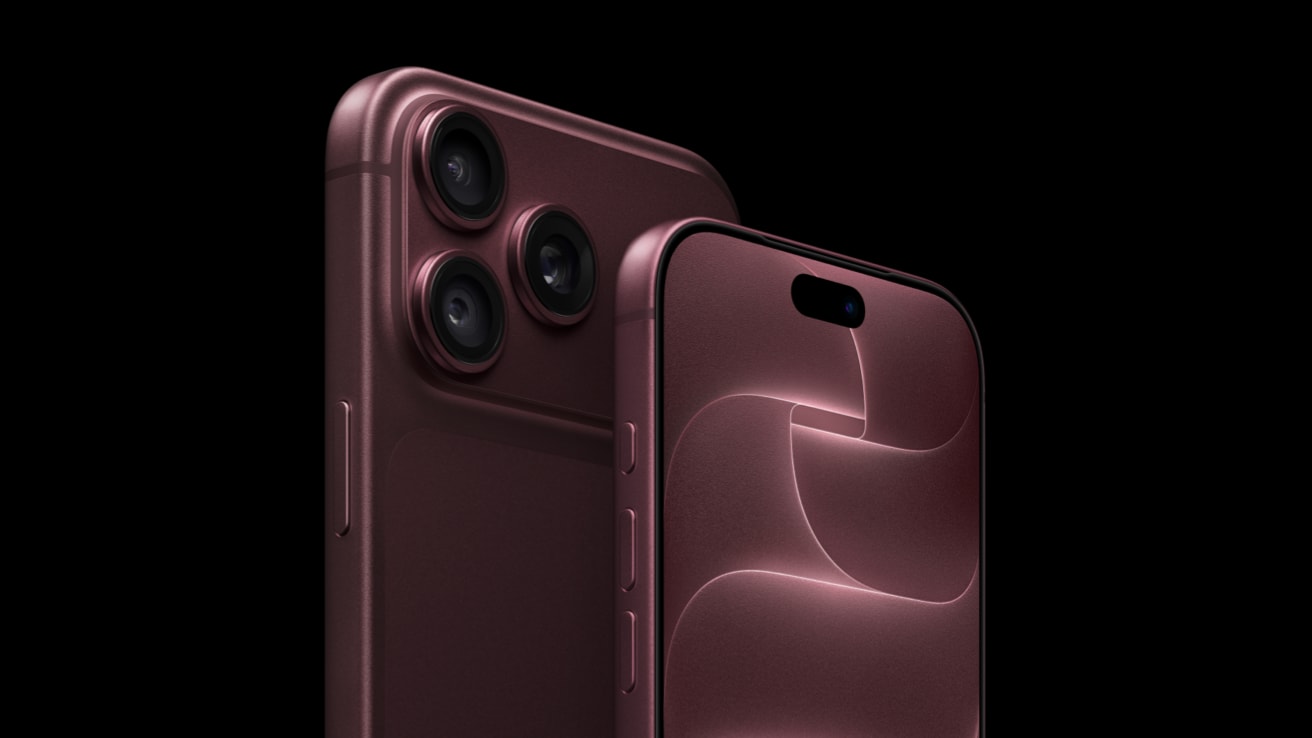
Apple also unveiled the iPhone 18 Pro and iPhone 18 Pro Max, its conventional premium flagship models.
The phones retain the familiar iPhone design but receive significant camera and performance upgrades.
Both use the new A20 Pro chip, which Apple says is built using a 2-nanometre process.
The chip has a six-core CPU, seven-core GPU and dual 16-core Neural Engine. Apple says CPU performance is up to 20% faster than the A19 Pro, while GPU performance improves by up to 40%.
The Neural Engine also offers twice the compute power for AI workloads.
The Pro models use an improved thermal system to sustain performance during demanding tasks.
4. A variable-aperture camera comes to the iPhone
One of the biggest camera changes on the iPhone 18 Pro models is the new 48MP Fusion Main camera with variable aperture.
The system uses six laser-cut blades to adjust between four aperture settings.
That allows the camera to automatically adapt to lighting conditions and depth of field. Users can also manually adjust the aperture.
Apple has added more professional controls to the Camera app, including shutter speed, white balance and histogram information.
Photographic Styles also receive additional controls for texture and grain.
Video improvements include 4K Dolby Vision HDR time-lapse, post-capture Cinematic effects and an updated Audio Mix system.
The iPhone 18 Pro starts at $1,199, while the Pro Max starts at $1,299.
Pre-orders begin September 12, with both models available from September 18.
5. Apple adds a new way to verify photographs
Apple introduced another camera feature aimed at the growing problem of manipulated and AI-generated images.
The Apple Reference Image allows the Main camera to sign sensor data associated with a photograph.
Private Cloud Compute can then create a reference image that users can compare with the final photograph.
Apple says the feature could help photographers, photojournalists and other users understand whether an image has been altered after capture.
The feature is part of Apple’s broader attempt to build trust around digital images as generative AI makes synthetic and heavily edited photographs harder to distinguish from originals.
6. Apple Watch Series 12
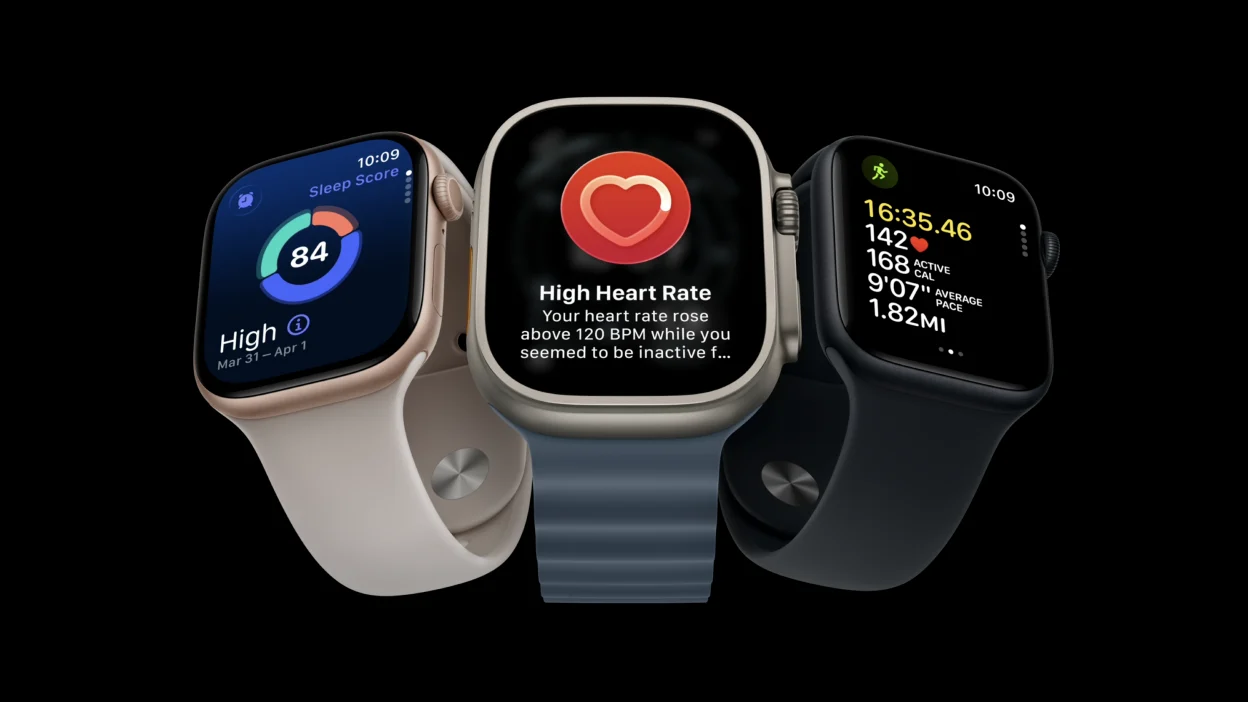
Apple also introduced the Apple Watch Series 12, with new health, fitness and audio capabilities.
The watch uses Apple’s new S11 chip and adds new health-monitoring features. Apple has also expanded its sleep and fitness tracking capabilities.
One of the biggest additions is Audio Intelligence, which uses AI to process audio captured by the watch.
The feature can help with tasks such as transcribing conversations and turning spoken information into notes.
The watch also gains new health and fitness tools, including an expanded readiness experience designed to help users understand their body’s condition.
The Series 12 starts at $399.
7. Apple Watch Ultra 4
Apple also updated its rugged smartwatch line with the Apple Watch Ultra 4.
The Ultra 4 gets the same new S11 chip and a range of health and fitness upgrades.
Apple says the watch can provide up to two days of battery life.
The device also benefits from the new Audio Intelligence features, including tools for capturing and processing spoken information.
The Ultra 4 starts at $799.
Apple’s focus on health and audio intelligence across the two watches shows how the company is expanding AI beyond the iPhone.
Instead of treating AI only as a chatbot or writing assistant, Apple is using it to process information gathered through devices that people wear throughout the day.
8. AirPods 5
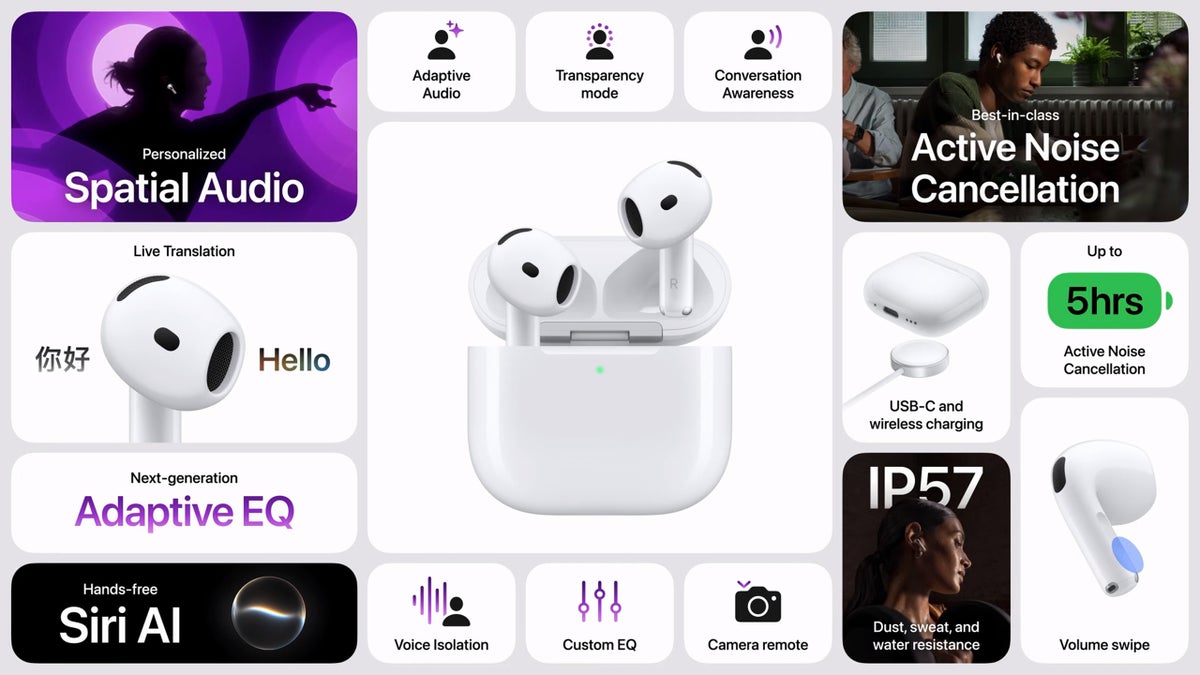
Apple’s wireless audio lineup also received an update with AirPods 5.
The new earbuds bring active noise cancellation to the standard AirPods line, making the feature available at a lower price point than Apple’s premium AirPods Pro models.
Apple has also improved audio performance and added adaptive audio features.
A higher-priced version includes wireless charging, while the standard model uses a conventional charging case.
The AirPods 5 start at $129, with the higher-end version priced at $149.
Apple also demonstrated new translation capabilities tied to its AI strategy, allowing users to translate conversations through its ecosystem.
9. Siri AI gets a bigger role
Artificial intelligence was a major part of the event, even though Apple did not introduce a separate AI product.
Instead, the company is integrating AI more deeply into the devices people already use.
The new Siri AI can draw on information across a user’s iPhone, including messages and emails, to answer questions and perform tasks.
For example, Siri can find information from personal conversations and then use it to complete an action on the user’s behalf.
Apple is also allowing Siri to understand what is displayed on the screen.
The company is presenting the iPhone as an “intelligent personal hub”, rather than simply another smartphone with an AI assistant.
Privacy remains a central part of Apple’s pitch.
Many AI operations run directly on the device. When cloud processing is necessary, Apple says its Private Cloud Compute system is designed to prevent Apple from accessing the user’s personal information.
That approach is becoming an increasingly important part of Apple’s competition with companies such as Google and OpenAI.
10. iOS 27 and software updates
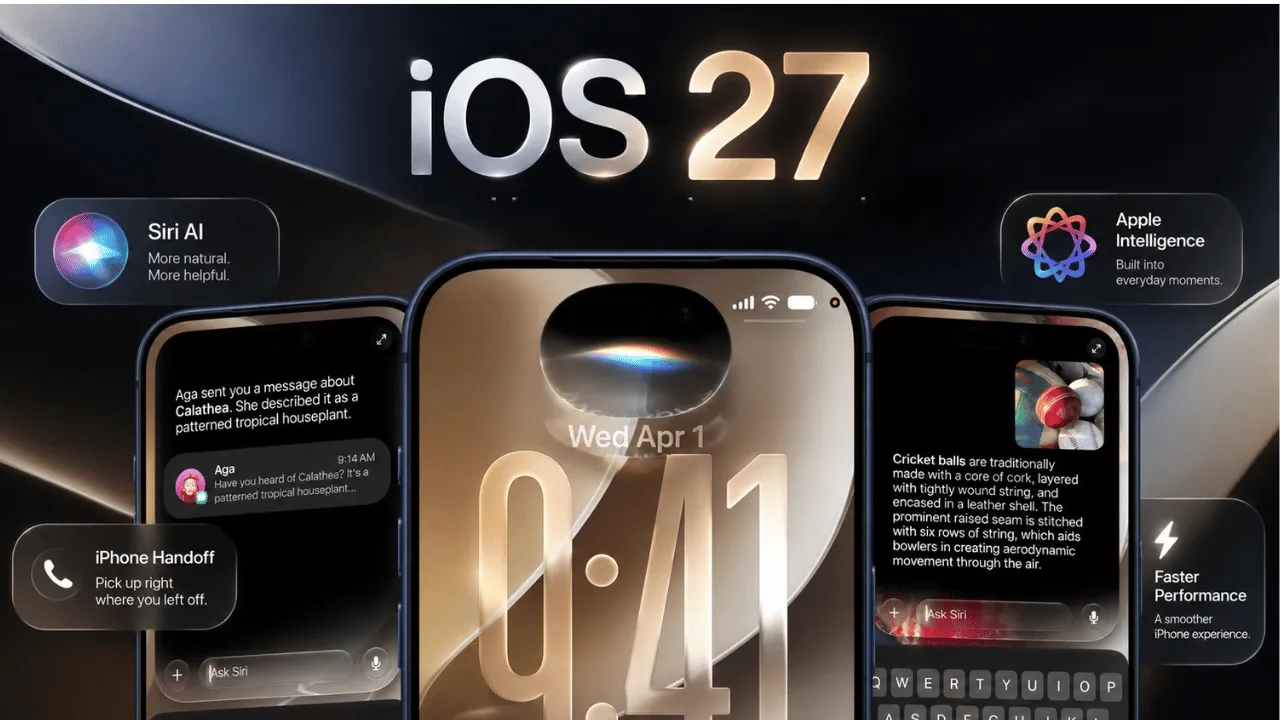
The new hardware arrives alongside Apple’s latest software ecosystem.
iOS 27 brings the new Siri AI experience and additional Apple Intelligence features.
On the iPhone Duo, the software has been adapted for the larger folding display.
Users can run two apps side by side, open multiple windows and create saved combinations of apps.
The new software also expands Apple’s AI capabilities across its devices.
Apple’s other platforms are receiving corresponding updates, including watchOS 27, iPadOS 27, macOS and visionOS.
What Apple did not announce
Despite months of speculation around a much broader hardware refresh, Apple did not announce everything that had been rumoured before the event.
The company did not unveil a standard iPhone 18 at the event.
There was also no new iPad, MacBook or Vision Pro announcement.
Reports had also suggested that Apple could introduce AirPods with cameras. That did not happen. Camera-equipped AirPods are now reportedly expected at a later date rather than at the September event.
What the event says about Apple’s new strategy
The “Surprise and Shine” event was significant for more than the number of products Apple announced.
It was the first major product showcase under Ternus, who took over from Cook after 15 years of leadership.
The company is now pushing in several directions at once.
The iPhone Duo gives Apple a new hardware category and brings the company into direct competition with Samsung and Huawei in foldables.
The iPhone 18 Pro models strengthen Apple’s existing premium smartphone business with better cameras, performance and battery life.
The Apple Watch is becoming more capable as a health and AI platform.
And AirPods are gaining more intelligent audio features.
At the centre of all of them is Apple’s attempt to make AI part of the everyday experience without abandoning its emphasis on privacy.
The foldable iPhone will attract the most attention because of its design and $1,999 starting price. But the broader message from the event is that Apple is trying to build an ecosystem where AI works across the iPhone, watch and audio devices.
The company has spent years refining the existing iPhone formula. With the Duo, Apple is now changing the formula itself.
Whether consumers embrace that change will become clearer when the foldable reaches stores in October.
For now, “Surprise and Shine” marks the beginning of a new product era for Apple — and the first major test of Ternus’ leadership.
Product pricing and availability
| Product | Starting price | Availability |
|---|---|---|
| iPhone Duo | $1,999 | October 23 |
| iPhone 18 Pro | $1,199 | September 18 |
| iPhone 18 Pro Max | $1,299 | September 18 |
| Apple Watch Series 12 | $399 | September 18 |
| Apple Watch Ultra 4 | $799 | September 18 |
| AirPods 5 | $129 | September 18 |
The iPhone 18 Pro models, Apple Watch Series 12, Ultra 4 and AirPods 5 begin pre-orders ahead of their September 18 launch, while the iPhone Duo follows in October.