





































Advanced Micro Devices used the CES trade show in Las Vegas on Monday to showcase its latest push into artificial intelligence chips, as it works to narrow the gap with market leader Nvidia.
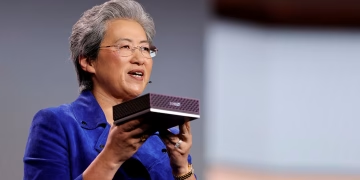
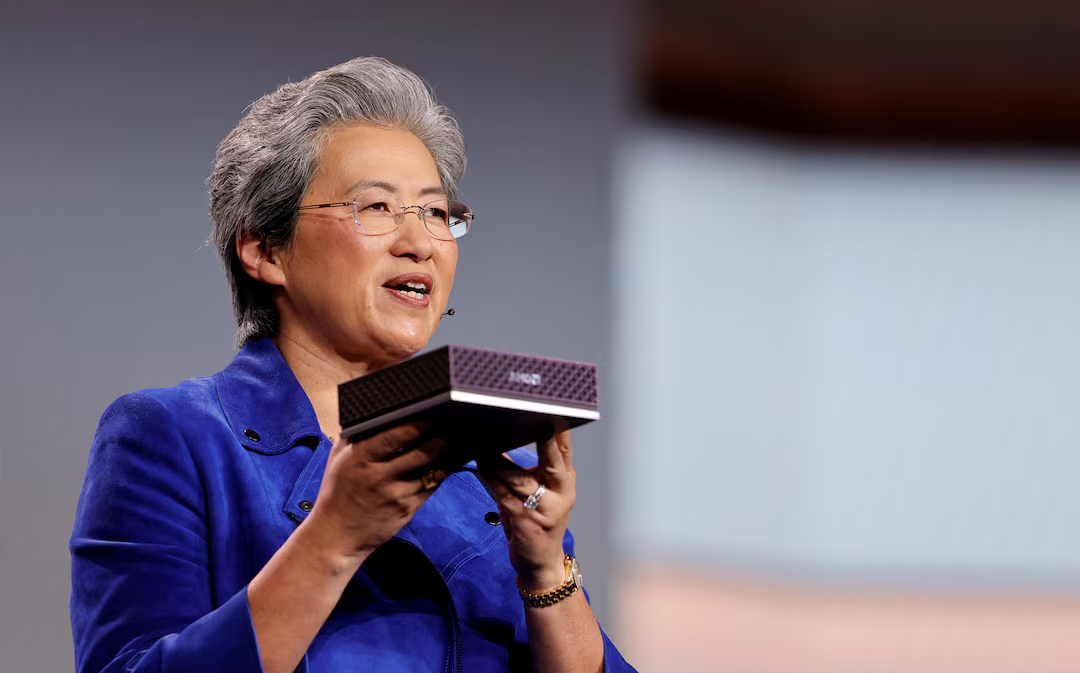
AMD CEO Lisa Su unveiled several new processors, including the MI455, a high-end AI chip designed for data centre server racks and already being sold to customers such as ChatGPT maker OpenAI. She also introduced the MI440X, an enterprise-focused version of the MI400 series built for businesses that want to deploy AI workloads on existing on-premise infrastructure, rather than specialised AI clusters. The MI440X is based on an earlier chip design that the United States plans to use in a supercomputer.
Although AMD is one of Nvidia’s strongest competitors in AI chips, it has struggled to match Nvidia’s scale and revenues. Still, its October deal with OpenAI marked a major endorsement of AMD’s hardware and software capabilities. Analysts say the partnership is unlikely to weaken Nvidia’s dominance in the near term, as Nvidia continues to sell every AI chip it produces.
At the event, OpenAI president Greg Brockman joined Su on stage and stressed that advances in chip performance are essential to meeting OpenAI’s rapidly growing computing needs. Looking further ahead, Su previewed AMD’s upcoming MI500 processors, which she said will deliver up to 1,000 times the performance of older versions. AMD expects to launch those chips in 2027.
The CES presentation also featured a glimpse into applied AI beyond data centres. Daniele Pucci, CEO of Italian AI firm Generative Bionics, appeared alongside Su to introduce GENE.01, a humanoid robot. Pucci said the company plans to begin manufacturing its first commercial humanoid robot in the second half of 2026.
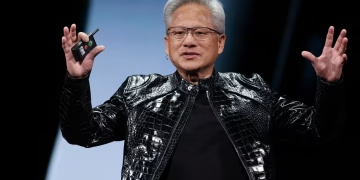
AMD’s announcements came on the same day Nvidia revealed new details about its next-generation Vera Rubin platform, which Nvidia CEO Jensen Huang said is already in full production and set to debut later this year.
The OpenAI partnership is expected to become a significant growth driver for AMD. The first deployments of AI systems using AMD’s MI400 series chips are scheduled for this year, and company executives say the deal could add billions of dollars to annual revenue over time. However, Nvidia continues to generate tens of billions of dollars per quarter from AI chip sales, a level AMD has yet to reach.
Beyond data centres, AMD also launched its Ryzen AI 400 Series processors for AI-powered PCs, along with Ryzen AI Max+ chips aimed at advanced local AI inference and gaming. Intel, meanwhile, held a separate CES event and said its upcoming Panther Lake chips would be available for order starting Tuesday.