
















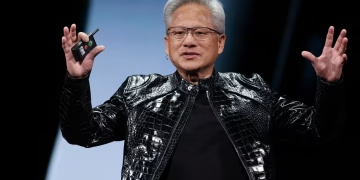





















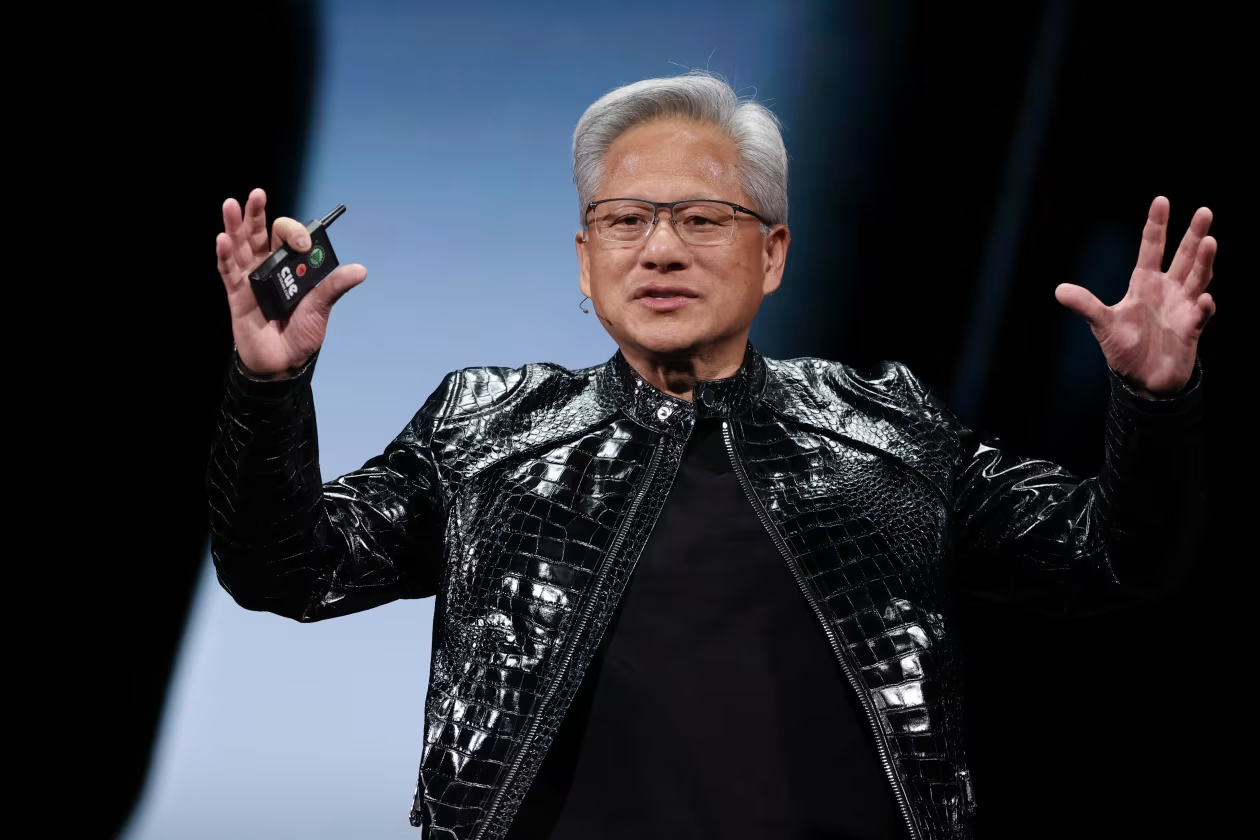
Nvidia has begun full production of its next-generation artificial intelligence chips, CEO Jensen Huang said on Monday.
Speaking at the Consumer Electronics Show (CES) in Las Vegas, Huang said the new chips can deliver up to five times the AI computing power of Nvidia’s previous generation when running chatbots and other AI applications. He added that the chips are already being tested by AI companies in Nvidia’s labs and are expected to ship later this year.
The new platform, called Vera Rubin, is made up of six different Nvidia chips. A flagship Rubin server will include 72 graphics processing units (GPUs) and 36 central processing units (CPUs). Huang said the system can be linked into large clusters, or “pods,” containing more than 1,000 Rubin chips, which could improve the efficiency of generating AI “tokens” by up to ten times.
To achieve this performance jump, Nvidia is using a proprietary data format that Huang said the company hopes will become an industry standard. He noted that the gains come despite the chips having only about 1.6 times more transistors than their predecessors.
While Nvidia continues to dominate the market for training AI models, competition is growing in the area of deploying those models at scale. Rivals include traditional chipmakers like AMD, as well as major customers such as Google, which is developing its own AI chips. Huang said much of Nvidia’s recent work has focused on improving how AI systems deliver responses to large numbers of users, including a new storage layer designed to speed up long chatbot conversations.
Nvidia also unveiled a new generation of networking switches that use co-packaged optics, a technology designed to connect thousands of machines more efficiently. This puts the company in closer competition with firms such as Broadcom and Cisco.
Several major cloud providers, including Microsoft, Amazon, Oracle, Alphabet, and CoreWeave, are expected to be among the first customers to deploy the Vera Rubin systems.
Beyond hardware, Huang highlighted new software tools for self-driving cars. One of them, called Alpamayo, helps autonomous vehicles make decisions while keeping a detailed record engineers can later review. Nvidia plans to release both the software and the data used to train it, part of its broader push toward open-source AI development.
Huang also addressed Nvidia’s recent acquisition of talent and technology from AI startup Groq, saying the deal would not affect the company’s core business but could lead to new products. He added that demand remains strong for older Nvidia chips in China and said the company is still waiting for regulatory approvals to ship certain models to the country.
Overall, Huang said the combination of new chips, networking technology, and software reflects Nvidia’s strategy to remain central to the rapidly evolving AI ecosystem.