



























President Bola Ahmed Tinubu has initiated a major leadership transition within Nigeria’s petroleum regulatory framework, formally requesting the Senate’s confirmation of new chief executives for the country’s upstream and midstream/downstream petroleum regulators following the resignations of Engr. Farouk Ahmed and Gbenga Komolafe.
The President has nominated Oritsemeyiwa Amanorisewo Eyesan as Chief Executive Officer of the Nigerian Upstream Petroleum Regulatory Commission (NUPRC) and Engr. Saidu Aliyu Mohammed as Chief Executive Officer of the Nigerian Midstream and Downstream Petroleum Regulatory Authority (NMDPRA).
Strategic Departures at the Helm
Engr. Farouk Ahmed, who served as Chief Executive Officer of the NMDPRA, and Gbenga Komolafe, former Chief Executive Officer of the NUPRC, tendered their resignations amid heightened public scrutiny of the petroleum regulatory environment. Their exits mark a significant moment in the governance of Nigeria’s oil and gas sector, particularly at a time when regulatory credibility, transparency, and investor confidence remain under intense focus.
The resignations follow mounting political and institutional pressure arising from allegations and public claims concerning regulatory practices within the petroleum sector. While both former chief executives had previously denied wrongdoing and called for due process, the evolving situation prompted decisive executive action aimed at safeguarding institutional integrity.
Presidential Intervention and Senate Oversight
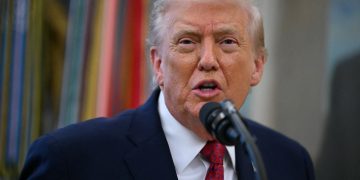
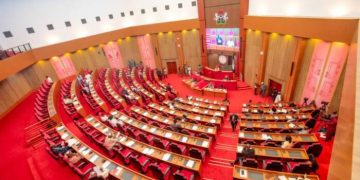
In his communication to the National Assembly, President Tinubu emphasized the need for swift legislative consideration of the nominations to ensure continuity in regulatory oversight and policy implementation under the Petroleum Industry Act (PIA).
According to the Presidency, the nominations reflect a deliberate effort to reinforce professionalism, technical competence, and strategic leadership across Nigeria’s energy regulatory institutions.
Profiles of the Nominees
Oritsemeyiwa Amanorisewo Eyesan is a seasoned economist and former senior executive of the Nigerian National Petroleum Company Limited, with over three decades of experience across upstream operations, strategic planning, and corporate governance. She retired as Executive Vice President, Upstream, and is widely regarded as a technocrat with deep institutional knowledge of Nigeria’s oil and gas value chain.
Engr. Saidu Aliyu Mohammed is a veteran chemical engineer and industry leader with extensive experience in refinery operations, gas infrastructure, and pipeline development. His professional background includes leadership roles at the Kaduna Refining and Petrochemical Company, the Nigerian Gas Company, and key national projects such as the Escravos–Lagos Pipeline System and the Ajaokuta–Kaduna–Kano Gas Pipeline.
Sector Implications
The leadership changes come at a critical juncture for Nigeria’s petroleum industry, as the government seeks to consolidate reforms under the Petroleum Industry Act, strengthen regulatory independence, and restore stakeholder confidence amid global competition for energy investment.
Industry analysts note that the Senate’s confirmation process — and the subsequent performance of the incoming executives — will be closely watched by domestic and international investors, oil producers, refiners, and policy stakeholders.
With the proposed appointments, the Tinubu administration signals its intent to recalibrate regulatory governance and reinforce accountability within one of Nigeria’s most strategically vital sectors.