


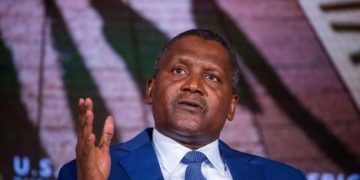





























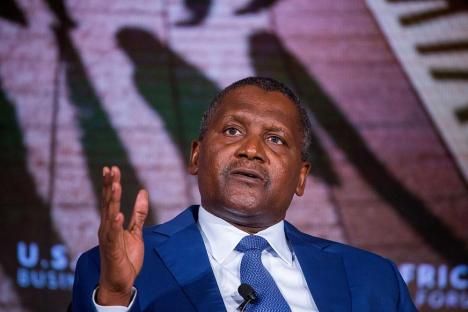
The Economic Community of West African States (ECOWAS) has appointed Nigerian industrialist Aliko Dangote as the inaugural Chairman of its newly established ECOWAS Business Council (EBC). The announcement, made during the 95th Ordinary Session of the Council of Ministers in Abuja, positions Dangote at the forefront of an ambitious effort to strengthen private-sector involvement in West Africa’s economic development.
The creation of the ECOWAS Business Council marks a significant shift in the bloc’s strategy to enhance economic integration. Historically dominated by government-driven initiatives, ECOWAS now intends to foster a more coordinated partnership with business leaders and investors who play critical roles in regional trade, industrialization, and job creation. The council is expected to serve as a high-level platform where the private sector can meaningfully influence policy decisions, promote cross-border investment, and help dismantle persistent trade barriers within the region.
Dangote’s appointment has been widely welcomed, given his expansive business operations and reputation for championing African industrial growth. His conglomerate—spanning cement, fertilizer, sugar, petrochemicals, and massive infrastructure investments—already operates in several ECOWAS member states. This regional footprint, combined with decades of business leadership, provides him with a unique vantage point on the challenges and opportunities shaping the West African economic landscape.
According to ECOWAS Commission President Dr. Omar Alieu Touray, Dangote’s leadership is expected to catalyze intra-regional trade and drive collective action toward economic integration. He noted that the bloc must increasingly rely on its internal investment capabilities rather than remain dependent on volatile foreign capital. By bringing influential business figures “around the table,” the EBC aims to create a shared vision for sustainable growth, enhanced competitiveness, and stronger regional value chains.
The council’s agenda extends beyond trade facilitation. It is expected to contribute to broader ECOWAS initiatives such as improving energy infrastructure, supporting the region’s monetary integration roadmap, enhancing transport and logistics networks, and stimulating private-sector solutions to ongoing political and humanitarian challenges affecting member states. Through strategic collaboration, the council may help reduce regulatory fragmentation, encourage harmonized business policies, and foster an enabling environment for entrepreneurship across borders.
If successful, the ECOWAS Business Council could become a transformative force in West Africa. It holds the potential to attract regional investment, boost industrial activity, and lower barriers that have historically constrained economic integration. Dangote’s leadership may also inspire confidence among local and international investors, signaling that the region is committed to building a stronger, more interconnected market.
However, the council’s success will depend on sustained cooperation among member governments, transparent governance structures, and the ability to tackle persistent issues such as inadequate infrastructure, inconsistent regulations, and security concerns in parts of the region. Nonetheless, the launch of the EBC—and the decision to appoint Africa’s most prominent businessman as its pioneer chairman—reflects a bold and strategic step toward a more prosperous and united West Africa.
Dangote’s new role symbolizes not just ECOWAS’s trust in private-sector leadership, but also a broader recognition that regional integration can only be achieved when governments and businesses work hand in hand. As the council begins its work, the eyes of the continent—and beyond—will be on West Africa to see whether this new partnership can finally unlock the region’s vast economic potential.