

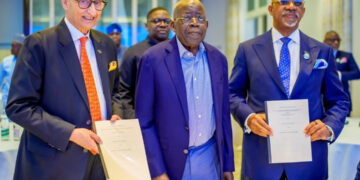































The Nigeria Customs Service (NCS) has reaffirmed its commitment to a technology-first future during a specialised one-day workshop for media stakeholders held in Abuja. This strategic engagement was designed to highlight the agency’s shift toward automation and digital transparency. Comptroller-General of Customs (CGC), Bashir Adewale Adeniyi, underscored the necessity of this transition, noting that the rapidly changing global trade landscape demands an agile and tech-driven approach to border management.
The event featured a keynote address delivered by Deputy Comptroller-General (DCG) Timi Bomodi, who represented CGC Adeniyi. During the presentation, DCG Bomodi detailed how the Trade Modernisation Project (TMP) serves as the backbone of the Service’s new operational philosophy. He emphasised that by integrating advanced technology into everyday workflows, the NCS is moving away from the inefficiencies of manual processing and toward a model of “efficiency, transparency, and accountability” that aligns with international best practices.
Central to this digital roadmap is the launch of the B’Odogwu Customs Management System, a proprietary platform intended to streamline the entire trade lifecycle. By deploying this system alongside the Customs Verification Management System (CVMS), the NCS is creating a digital “single source of truth” for all cargo and revenue data. This unified tech stack is designed to eliminate human bottlenecks that have historically slowed trade at Nigerian ports, ensuring the agency can meet its revenue targets while facilitating faster movement of goods.
In addition to software, the workshop highlighted the agency’s investment in hardware-driven solutions like the Electronic Cargo Tracking System and non-intrusive inspection tools. These innovations allow the NCS to maintain high-security standards without disrupting the flow of commerce. As DCG Bomodi noted on behalf of the CGC, the ultimate goal of these investments is to position Nigeria as a leader in global trade competitiveness, using technology to bridge the gap between local operations and international standards.